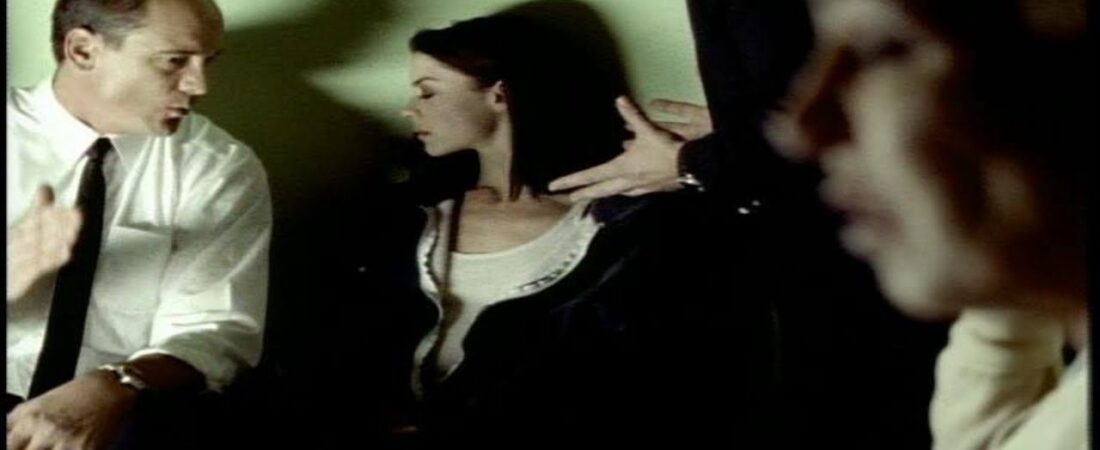
Almost 30 years ago (in July, 1996)…(god I’m old)…one of the most underrated bands of all time released their debut album Lemon Parade. The third single, released in February of 97, is what created a core musical memory for me. The song opens with its title and perfect follow-up statement:
If you could only see the way she loves me, then maybe you would understand, why I feel this way about our love, and what I must do.
Tonic’s “If You Could Only See” is the perfect argument about how seeing what drives a person helps an audience understand their intentions.
Just like I’ve found a connective thread to literally every song I’ve mentioned on this blog and education, YOU CAN BET YOUR BOTTOM DOLLAR I CAN DO IT TODAY!
Teachers get excited whenever students speak during a discussion (or even when we ask an open question out loud), but have we normalized something that can create problems down the road?
We’ve all been in this situation as either a teacher or a student. A teacher asks a question. A student raises their hand. The student says a thing. The teacher says: “Great,” or “interesting,” or “Does anyone want to add to that?” and moves on.
And the student who just spoke never had to do the hardest part.
They are rarely asked the tougher follow-up questions, because we are afraid to scare off the potential students who follow. Questions like: how do you know? What makes you say that? And what are you still not sure about?
We have built an entire system of education around the production of answers and the expectation that students argue for them: immediately, confidently, on demand. Claim the thing. Support the thing. Move on. And in the rush to get through content, to hit the standard, to check the box, we have dramatically underinvested in something that should come before all of that.
(Here comes your song connection, because I may be guilty of restarting the music video the whole time I wrote this morning)
So, when Emerson Hart sings “If you could only see the way she loves me, then maybe you would understand why I feel this way…” he clearly makes a claim. So, can we look for his support, and maybe ask a follow-up question?
THAT’S RIGHT! This is Post Six in my Project Zero Thinking Routines series. Today, we’re leading with the routine that mirrors what we already do in classrooms, and then swinging hard the other way with a family of routines designed to slow everything down, to give students the time to actually sit with something before we ask them to own it.
1. Claim, Support, Question
If you are a reading teacher, a social studies teacher, a science teacher, or, honestly, any teacher who has ever asked students to argue something in writing, you are already using a version of this.
Claim. Support. That’s the backbone of virtually every academic writing structure we teach. Make an assertion. Back it up with evidence. Paragraph structure. Essay structure. Lab report structure. It’s everywhere. We are very, very good at asking students to claim and support.
Here is what we rarely do:
We seldom ask them to question.
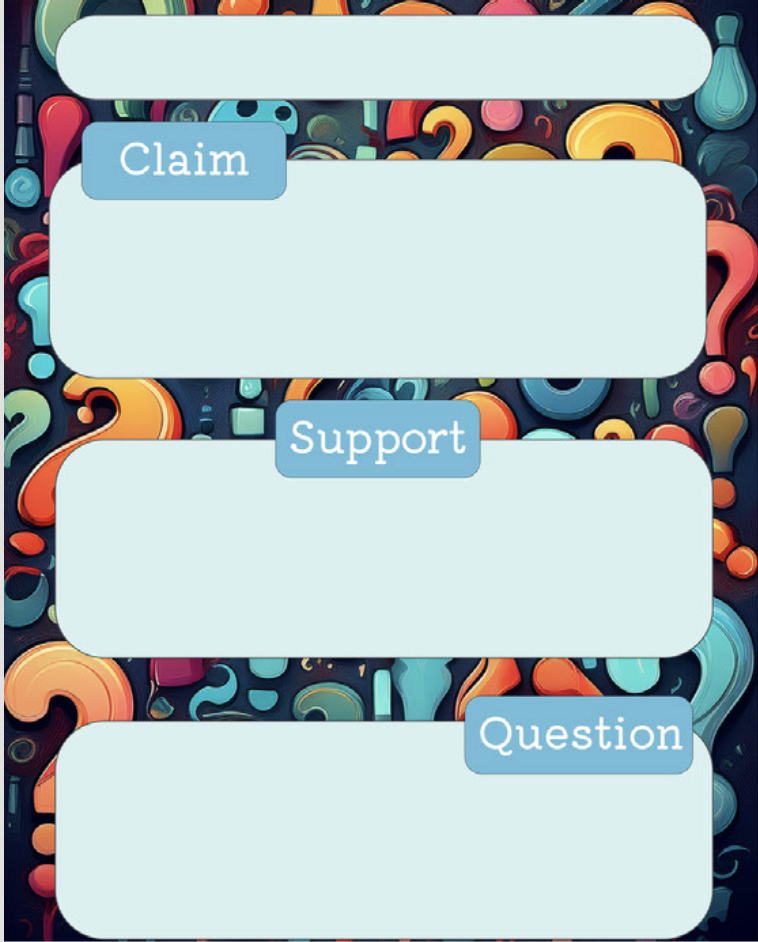
Claim, Support, Question is a Project Zero thinking routine built around exactly this gap. The structure is what it sounds like: a student makes a claim about whatever they’re studying (an interpretation, an explanation, a belief), identifies support for that claim (evidence, reasoning, examples, things they can point to), and then asks a question, something that isn’t explained by the claim, a gap in the evidence, something a reasonable person might push back on.
That third step is the one that changes everything.
Most argument instruction stops at support. Build the case. Defend the position. What that produces, as I can speak to as someone who’s written, analyzed, and defended more arguments than your average bear, is motivated reasoning (Monroe, anyone?). Students who are very good at constructing the strongest possible case for a position they’ve already committed to. That is not the same as thinking. That is the performance of thinking.
Claim, Support, Question insists on the question because it insists that reasoning is an ongoing process, not a destination. The moment you ask, “What does my evidence not explain?” you have stepped outside your own argument and looked at it honestly. That is genuinely hard. It is also one of the most important intellectual moves a person can make.
Honestly, the question step is weird for students at first. They have been trained, across years of schooling, to produce a claim, support it, and stop. Asking questions about your own argument feels like undermining yourself. So I tell them: every scientist does this. Every good lawyer does this. Every person who has ever actually changed their mind about something important did this. The question is not a sign that your claim is weak. It is a sign that your thinking is honest.
Project Zero recommends modeling this in the whole group first: identify a claim together, generate supports together, then invite questions together, before asking students to run it independently. That scaffolding matters, especially for the question step, because students need to see it modeled as an act of intellectual strength before they’ll do it themselves.
How I use it: Claim, Support, Question is my go-to any time I want students to do more than have an opinion; I want them to have a reasoned one. Text analysis, scientific reasoning, historical argument, ethical dilemmas, and data interpretation. And as you’ll see in a moment, it pairs extraordinarily well with everything that comes next.
Grab the template here
2. See, Think, Wonder (and its cousins)
Now we swing the other way.
If Claim, Support, Question is the thing we’ve been doing, but with a crucial third step added, See, Think, Wonder is the thing we have been systematically skipping, the slow, deliberate, observation-before-interpretation work that has to happen before students have anything worth claiming. We have not been doing it maliciously. We have been eliminating the space for the experiences of seeing and wondering in an era of high-stakes testing and strict pacing guides. (If you want my claims, support, and questions I asked, you can check out this post.)
As the Talking Heads once said, “And you may ask yourself,” don’t we have our students make observations all the time? “And I may say to myself,” most of the time, we are not actually seeing. We are pattern-matching. We glance at something, our brain helpfully fills in what it thinks is going on, and we are already two steps into interpretation before we’ve even really looked. Everything is just the “same as it ever was” without time to stop and smell the roses.
Students do this constantly, and we accidentally reward them for it because the fast interpretation looks like engagement. “Same as it ever was.“
See, Think, Wonder slows that down on purpose.
Here’s the routine: students look at an image, object, artwork, or artifact and respond to three prompts. I see… I think… I wonder…
Three prompts. Looks simple. Is not simple. Because the entire point of See, Think, Wonder is the separation of those three moves, and that separation is much harder than it looks.
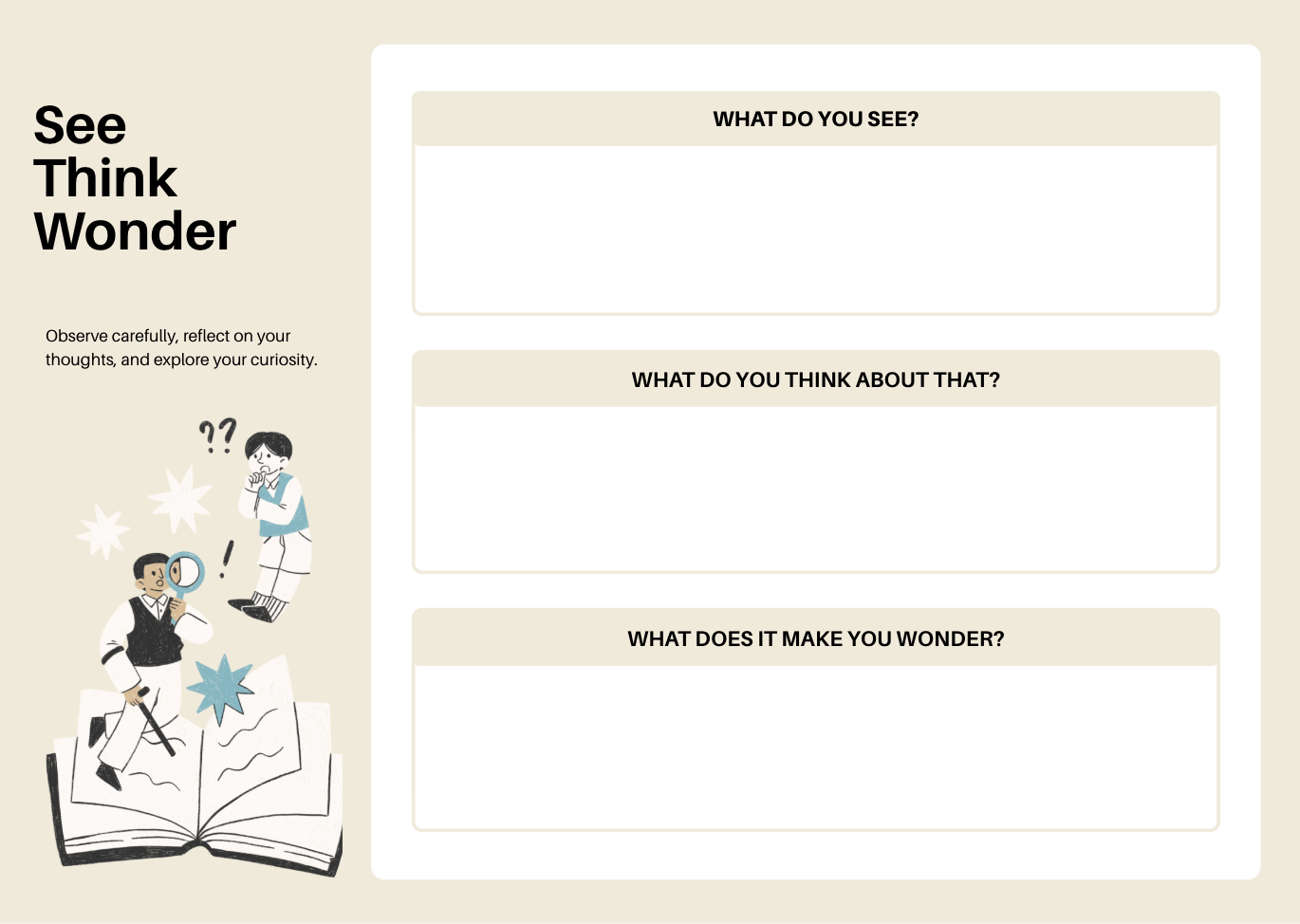
I see is observation only: what is literally, physically, observably there. Not what you think it means. Not what it reminds you of. What you can actually point to. I think is interpretation: what you believe is going on, what you’re inferring from what you observed. And I wonder is curiosity: the questions that remain open, the things the image doesn’t tell you.
The reason the separation matters so much is that most of us, students and adults alike, collapse these moves constantly and unconsciously. We say “I see a sad woman” when what we actually see is a woman with her head bowed and her hands covering her face, and what we think is that she’s sad. These are not the same thing. And training students to honor that difference, to insist that I see only describes what they can literally point to, builds the kind of careful, evidence-based observation that everything else in academic thinking depends on.
The follow-up question that makes this routine sing, straight from the Project Zero source: “What do you see that makes you say that?” Every time a student offers an interpretation in the I Think step, that question pushes them back to evidence. It’s the same discipline that makes Claim, Support, Question work; reasoning has to be grounded in what you can actually see and point to.
The I Wonder step is the one I think gets undervalued most. Teachers sometimes treat it as a fun add-on, the “any questions?” of the routine. But the wondering is where genuine inquiry lives. If you use See, Think, Wonder as a unit entry event, the questions students generate here become the driving questions for everything that follows. Don’t skip past them. Write them down. Post them. Return to them.
How I use it: Unit launches, mid-unit with new artifacts, and paired directly with Claim, Support, Question: students run STW first to observe and interpret, then take their strongest I Think response and push it through CSQ to turn it into a fully evidenced argument with honest self-interrogation built in. Observation → interpretation → claim → support → question. That sequence is one of the most complete thinking arcs I know.
Grab the template here
The Cousins: Two Variations Worth Knowing
See, Think, Wonder is the original. But Project Zero has extended it in two directions that are worth having in your toolkit:
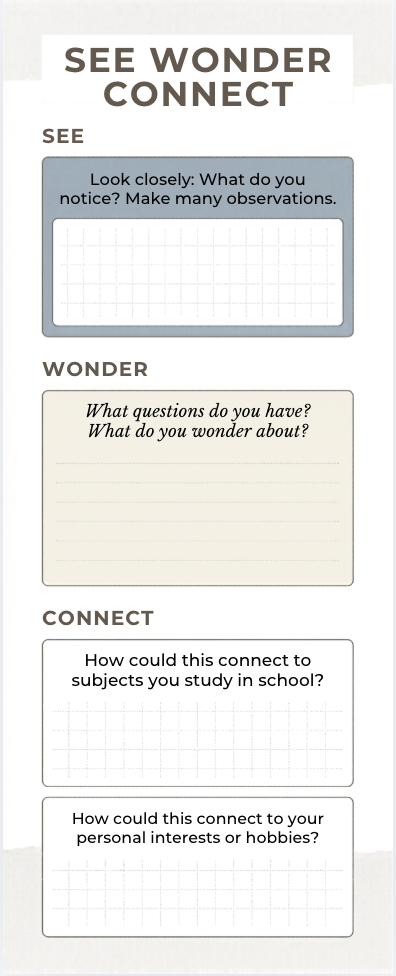
See, Wonder, Connect swaps Think for Connect: asking students not just to interpret what they see but to actively link it to prior knowledge, other things they’ve learned, things they’ve experienced, concepts from other disciplines. Project Zero notes that making connections can be genuinely challenging, and that’s kind of the point. The stretch to connect is the learning. This variation works beautifully when you want students to frame their learning as transfer-oriented from the start: how does this connect to what I already know?
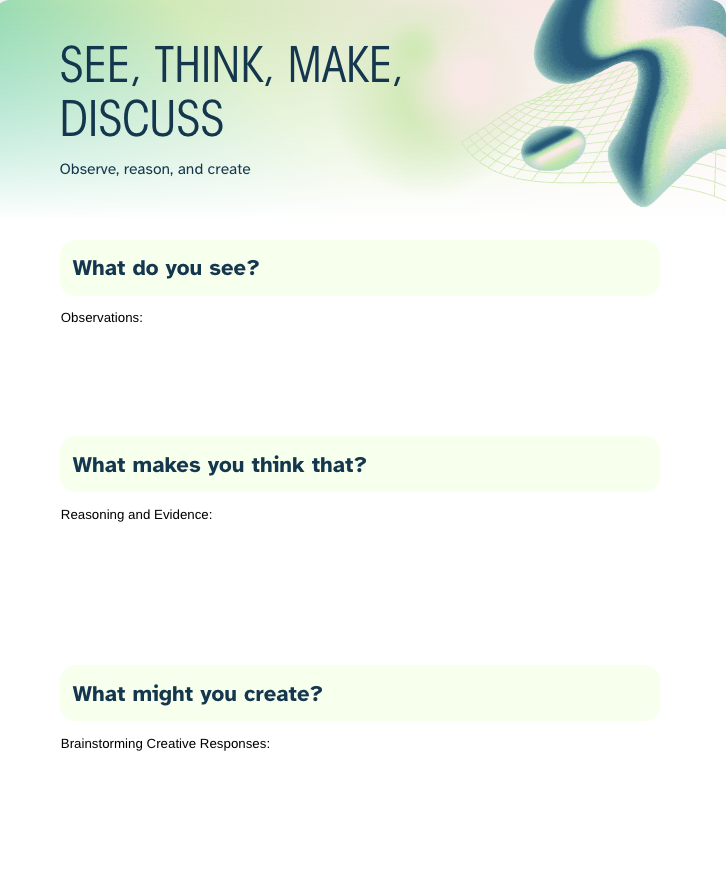
See, Think, Make, Discuss takes the routine in a completely different direction — it was developed specifically for thinking about civic life through art. After See and Think, instead of wondering, students make something: a drawing, a sketch, a quick creation that explores a civic idea or question that surfaced during the Think step. Then they discuss what they made. The making is not decorative — it’s a thinking move. It forces students to commit to an idea and externalize it in a form that others can respond to. Particularly powerful for social studies, ELA, and any context where you want students thinking about how they live together as a community.
Grab both templates here
The Thread Running Through All of It
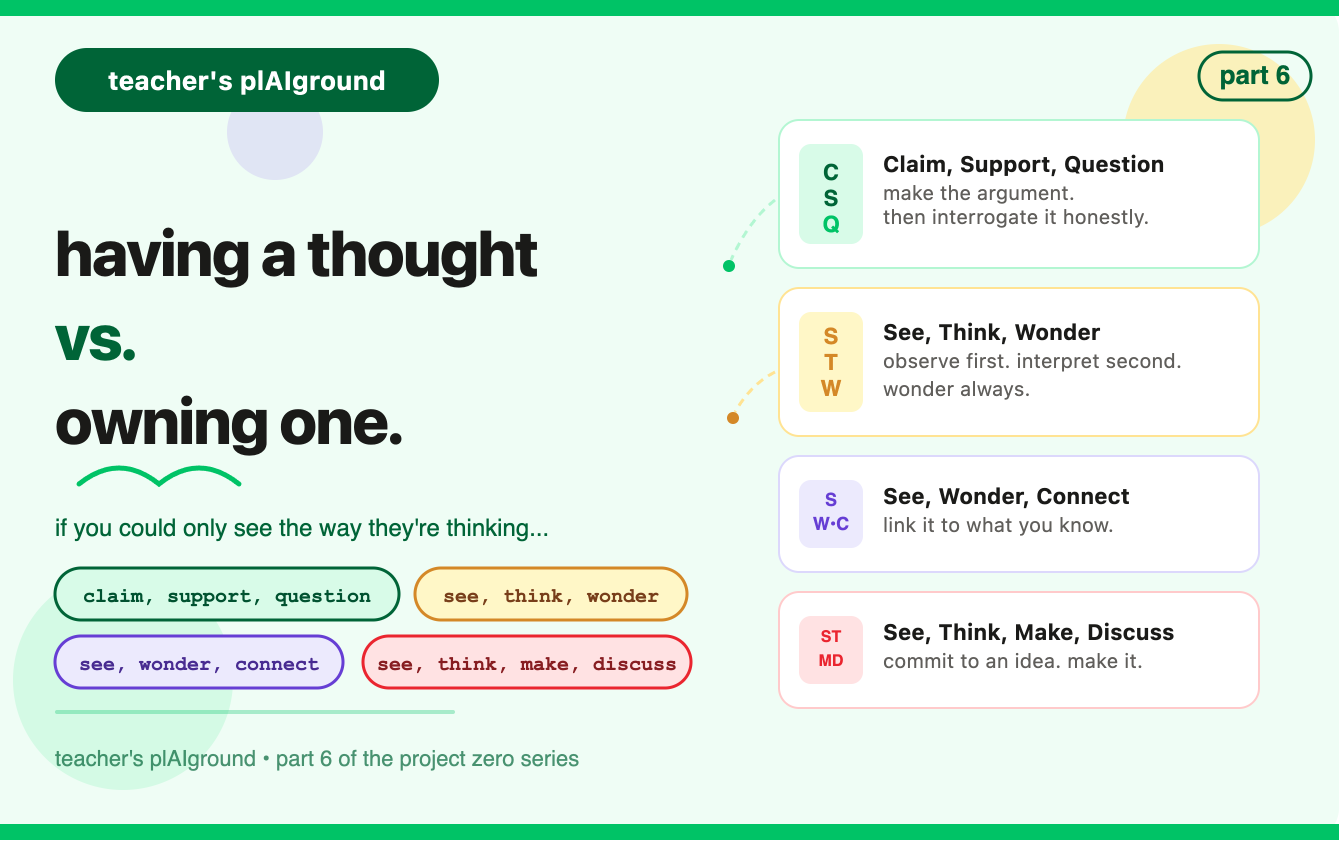
Claim, Support, Question. See, Think, Wonder. See, Wonder, Connect. See, Think, Make, Discuss.
One family asks: now that you have something to say, can you stand behind it?
The other asks: before you say anything, can you really look?
Together they form the complete arc — from careful observation, to honest interpretation, to evidenced argument, to genuine questioning — that rigorous thinking actually looks like in a classroom.
And here is the main thing I keep coming back to as I write this series:
Every single one of these routines is doing the same underlying work. They are all trying to close the gap between having a thought and owning one. Between noticing something and being able to say why it matters. Between producing an answer and being able to stand behind it.
So…(clears throat)…
If we could only see the way they’re thinking, then maybe we would understand, why they perform this way, in our class, and what we must do.
Post Seven is coming.
Templates for all routines in this post are linked above and in the free resource library. Catching up on the series? [Part One] | [Part Two] | [Part Three] | [Part Four] | [Part Five]