top of page
Classroom Culture
The stuff underneath the content: curiosity, safety, student voice, and what it actually takes to build a room where kids are willing to be wrong in public. Part philosophy, part practical moves, all deeply human.
Stop Pressing Play and Walking Away: How Edpuzzle Live Mode Changes Using Video in the Classroom
We've all been that teacher... You find the perfect video. Twelve minutes. Covers exactly what you need. You assign it, press play on the projector, and spend the next twelve minutes watching students do one of three things: take notes with varying degrees of engagement, stare at the screen with the particular glazed expression that means the content is entering one ear and leaving immediately through the other, or quietly do something else entirely while technically facing t

Dustin Rimmey
Aug 316 min read


Why Your Students Are Studying Wrong...and What to Do About It
A Knowt a day keeps the IDK away. I will see myself out. Actually, no. I will not. The research behind that terrible pun is genuinely extraordinary. And we need to remember, really remember, the power of memory and old-school pedagogical techniques to augment our reliance on technology. On Monday, I wrote about the Fast and Curious EduProtocol and how pairing it with Wayground turns a fifteen-minute daily quiz into one of the most visible growth experiences a student can have
Dustin Rimmey
Aug 287 min read


Fast, Curious, and Growing: How to Use the Fast and Curious EduProtocol With Wayground
Check out my "class" photo of some of my students' avatars! Monday morning. Students are shuffling in. The weekend is not quite over for anyone in the room, including you. Here is a routine that takes fifteen minutes, requires almost no prep once you have set it up, and will produce some of the most visible evidence of student growth you have ever seen in a classroom. It is called the Fast and Curious. Pairing it with Wayground might be the most satisfying thing you do all w
Dustin Rimmey
Aug 245 min read


The Playlist Is the Point: What Music Does for Teenage Brains and What We Can Do About It in the Classroom
I was always the headphones kid. From my first Walkman, to Discman, to a revolving door of MP3 players, and now my phone, which can stream music in an instant, I have always needed music in the background. I was even the kid who would try to break my over-ear headphones to run them up my sleeves so I could sit with my head on my hand and listen while I worked. It did something to help keep me calm and centered. Every time my students look at the clock, they see this sign. To
Dustin Rimmey
Aug 217 min read


How I Built an AI Planning Space That Actually Knows How I Teach
This may look similar to last Monday's post. I had several people reach out and ask for some additional steps or context on how I built the structure of my Claude project space. Also, the World History resource page is LIVE!!!!!! Every August I tell myself this will be the year I stay ahead of my own lesson plans instead of writing them at 10pm the night before. This year I tried something different. Before I planned a single lesson for tenth grade Modern World History, I s
Dustin Rimmey
Aug 176 min read


My First Two Days of School, Redesigned Around One Idea: Your Story Matters
The first two days of school are a negotiation. Students are figuring out who you are. You are figuring out who they are. Everyone is performing slightly more than they will for the rest of the year: students performing compliance, teachers performing authority, while the actual relationship that will make learning possible has not yet been established. I have been teaching for twenty years. I have done the syllabus reading, the procedure walk-through, the icebreaker where ev
Dustin Rimmey
Aug 126 min read


Year Zero Update: What We've Built for World History (and What's Coming Friday)
Checking in from a still-being-organized Room 288, the new home of the plAIground! When I wrote the Year Zero post back in June, I made a promise. . Everything I build gets shared. Two dedicated resource pages: one for US History, one for World History, updated as the year goes on. Not a highlight reel of the things that worked perfectly. Everything! It's August. I'm in my 2nd of 4 days of PD, and I see students for the first time on Thursday! Before the madness of Day 1 of Y
Dustin Rimmey
Aug 105 min read


The College Application Essay: Where Your Students' Favorite Subjects Finally Get Their Shot
Every year, approximately two million high school seniors sit down to answer one of the most absurd questions in American education. In 650 words or fewer, tell us who you are, what has shaped you, what you have learned from your greatest challenge, and why you are worth our investment. Please be specific. Please be authentic. Please be compelling. Please do not sound like the other two million people doing this exact same thing. You have until January. The college applicatio
Dustin Rimmey
Jun 226 min read


The Therapy Session Intake Form: What Your Students' Favorite Subjects Really Need (Free Classroom Activity Template!)
I have a therapist. She is wonderful. She is patient. She is exactly the kind of calm, grounded professional that someone with an anxiety disorder and a panic disorder probably needs in their corner. She also spent the better part of two years trying to get me to find my mind palace. For those unfamiliar, a mind palace is a meditation and visualization technique where you imagine a physical space: a house, a castle, a familiar building, and use it as a mental anchor for relax
Dustin Rimmey
Jun 158 min read


The Quieter the Room, the Louder the Thinking
We are eight posts into this series! What a wild ride it has been! Eight posts, somewhere north of twenty thinking routines. A Costco parking lot, a Tonic deep cut, This Old House, a soup can, and one very passionate argument about the Oxford comma. We have covered routines that teach students to observe carefully, argue honestly, find their words, push past their first thought, sit in complexity, see before they interpret, and document how far their thinking has traveled. An
Dustin Rimmey
Jun 37 min read

Recess Isn't a Break From Learning. It IS Learning. And We Forgot.
Sorry for no post on Wednesday, I'm dealing with one of those lovely "spring flus" and my body waged war against itself....but I'm back today! Your next Visible Thinking Routines post will be out next Wednesday!! I grew up in the era of giant maps painted on blacktop (the sweetness of the 90's amirite?). My elementary school had one, a full map of the United States, state lines and all, spread across the outdoor concrete in faded paint. I remember spending recesses running a
Dustin Rimmey
May 87 min read
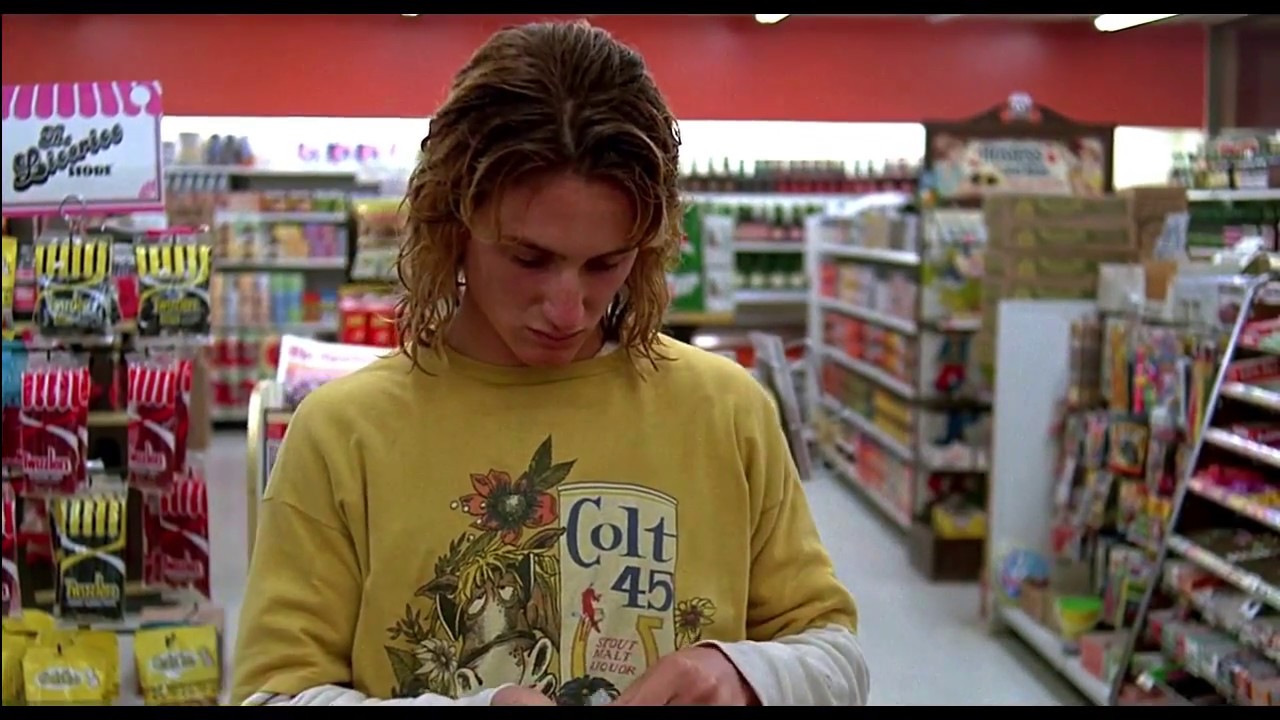
The Vibes Were Off: Teacher Intuition, the Data Obsession, and the Thing AI Will Never Have
I was vibe-aware before the kids these days started talking about vibes. Though I always feel like Steve Buscemi when I hear them say it. What I can say, and for those of you who have either seen me present, heard me talk, or chatted with me, I definitely am self-aware of the vibe I bring everywhere. Part of my inner child thinks I'm Jeff Spicoli from the end of Fast Times at Ridgemont High.. My tasty waves are something I find engaging, or I hope engages others. My cool buz
Dustin Rimmey
May 18 min read


Make Your Students Earn Their Investments with Jumpstarter and Teacheon (New Classroom Templates!)
Last Monday, I shared the GoFundMe in the Ditch That Textbook online community. (You should definitely join!!!) When I shared it, I described it as "an off-the-rails idea for a 'social media' template," and a "shower thought meets asking Claude some questions meets Canva during my plan." I expected some nice engagement. Maybe a few teachers saying they'd try it. What I did not expect was for the community to hand me two more ideas before the day was over. That is the thing ab
Dustin Rimmey
Apr 276 min read


You Are Not a Vending Machine: Emotional Labor, Compassion Fatigue, and What "Remember Your Why" Gets Wrong
Some mornings, I walk into my classroom before my students arrive and I tape a sign to the board. Several years ago, it started on a large Post-it pad, the kind on a wheeled easel — on a morning when I had planning period first, and I knew, before anyone walked through my door, that I was not okay. The sign tells my students what they need to know: where to find their assignments, that loud or unexpected noises are a trigger for me, and that I cannot process more than one per
Dustin Rimmey
Apr 246 min read


The GoFundMe Activity: Crowdfunding Mastery in Any Content Area (Classroom Template Included!)
As you may have noticed, I've continued combing the wide world of the internet to find social media and/or website templates to manipulate into a tool for students to showcase their content mastery. While I've typically grabbed "safe" websites that feel like they have an obvious connection, today's is something that came at me from thinking a little sideways . Here is how this one started. I was brainstorming with Claude this morning, which, if you have been reading this blog
Dustin Rimmey
Apr 204 min read


We Blamed Google. Now We're Blaming AI. We Need to Stop. A Case for Intentional Instructional Design in the Age of AI
I was a senior in high school in the fall of 2001. The internet's influence was growing. Google was becoming more mainstream. And the adults in charge of education were absolutely losing their minds about it. Which one of those kids is me, Senior Year, 2002? The concern, stated with full sincerity by serious people in serious publications , was that students would simply Google everything, copy and paste their way through school, and render the entire enterprise of educatio
Dustin Rimmey
Apr 1712 min read


The First Thought Is Just the Beginning (Project Zero Thinking Routines Pt 4)
We are four posts into this series now, and I want to take a second to zoom out. Post One was about giving students the tools to recognize that they're already thinking. Post Two was about teaching them to slow down and notice things... really notice them, the way you notice a piece of art differently on the second look than the first. Post Three was about helping students find their words ; about the gap between having a thought and being able to actually say it out l
Dustin Rimmey
Apr 158 min read


We Schooled the Curiosity Right Out of Them
Will Ferrell once played legendary Cubs announcer Harry Caray on SNL. If you've never seen it, the bit is basically: Harry Caray is a man completely unmoored from social norms, asking the most unfiltered, bizarre questions imaginable: to scientists, to astronauts, to anyone fortunate enough to sit across from him, with zero apology and maximum enthusiasm. At one point, Harry says, completely unprompted: " I'm curious like a cat. My friends call me Whiskers. " And here's the t
Dustin Rimmey
Apr 109 min read


Does the Unessay Help or Hinder Teachers on the Hunt for their White Whale? (Part 2)
On Monday, we explored the concept of the unessay . In short, the unessay is an assignment concept forwarded by Daniel Paul O'Donnell in 2012 . O'Donnell used unessays to question the overall role that formalized academic essays had played in education throughout the history of the system. Specifically, he argued that traditional essays are a "static and rule-bound monster" that forces students to comply rather than explore and showcase their intellectual passions. The g
Dustin Rimmey
Mar 115 min read


Exploring the Pedagogical Prowess and Peril of the Unessay. (Part 1)
Since the dawn of the assigned essay, educators throughout time have been chasing their white whale. An essay assignment that students cannot find a way to cheat on, regardless of how the assignment is constructed. Image generated using Google's Nano Banana 2.0 From students copying encyclopedia pages at their local library, to copy/pasting in full Wikipedia pages and forgetting to remove the hyperlinks, to now AI, teachers just want to get their students to write, without ch
Dustin Rimmey
Mar 95 min read
bottom of page