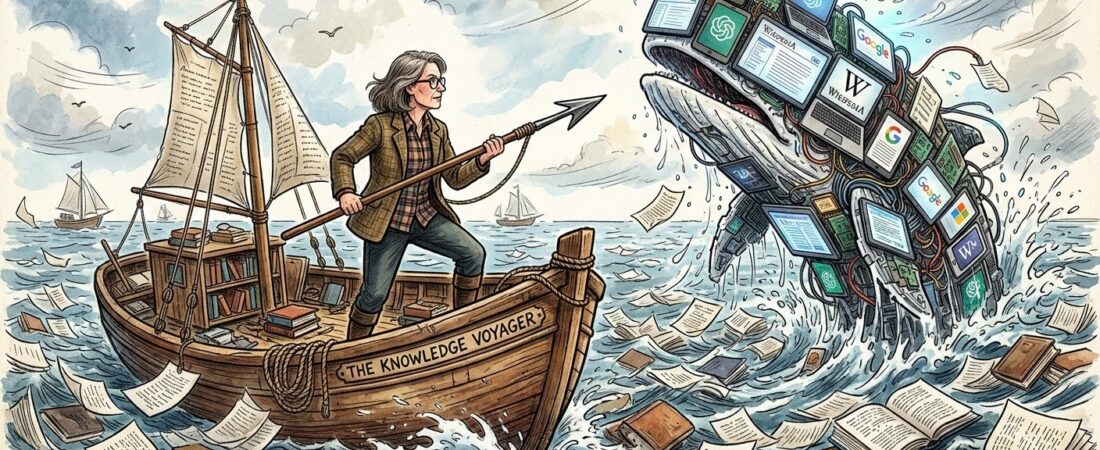
Since the dawn of the assigned essay, educators throughout time have been chasing their white whale. An essay assignment that students cannot find a way to cheat on, regardless of how the assignment is constructed.
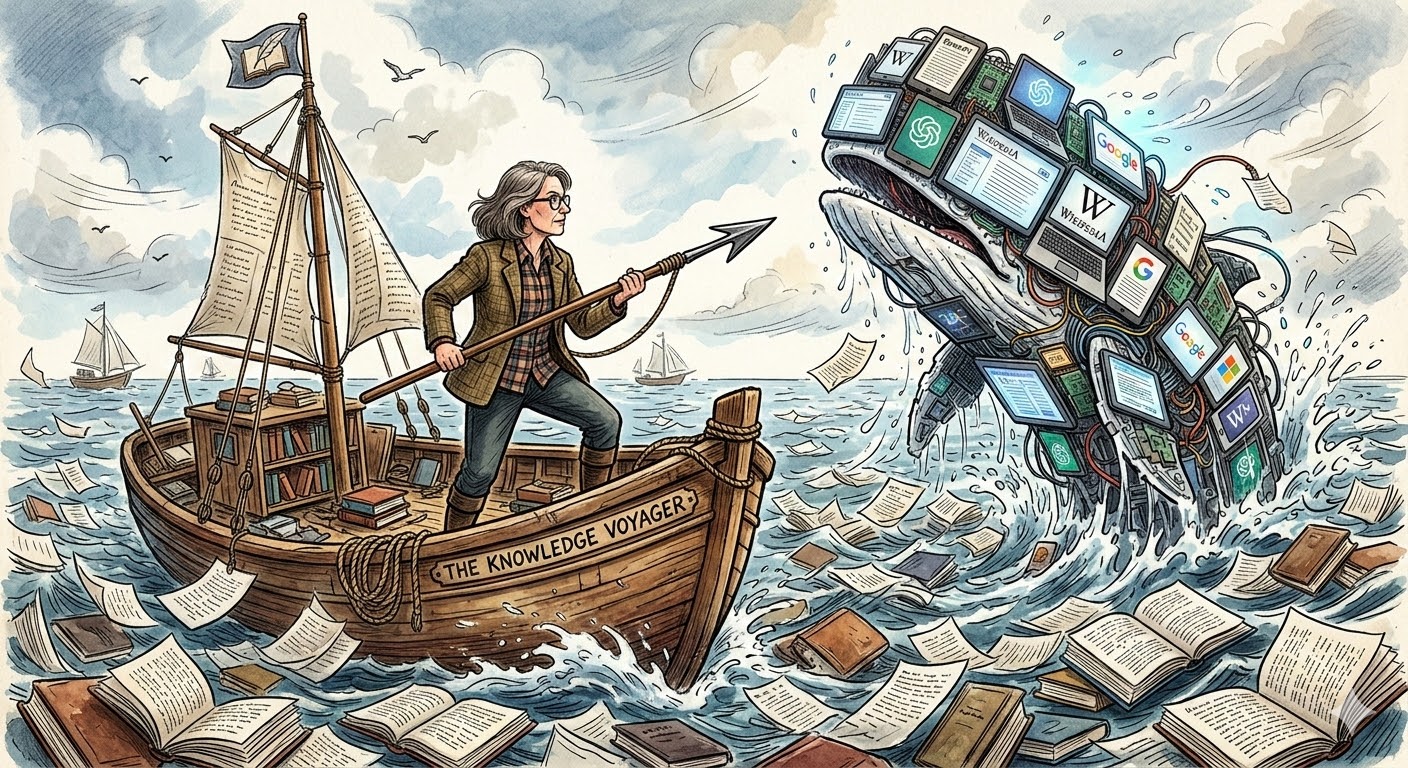
From students copying encyclopedia pages at their local library, to copy/pasting in full Wikipedia pages and forgetting to remove the hyperlinks, to now AI, teachers just want to get their students to write, without cheating!
I, at length, on previous iterations of the blog, online, and in person, have defended: why writing is important, embracing the cliche of process over product, and that AI detectors for cheating during writing are problematic. If you would like to hear my thoughts on any of those topics, please let me know! None of those are on the plate for today. This week, there will be a post on Monday, Wednesday, and Friday dedicated to a concept forwarded by Daniel Paul O’Donnell. We’ll explore what he calls the unessay.
What is the Unessay?
The unessay was introduced (according to everything else I’ve read) by Daniel Paul O’Donnell in 2012. His original focus was not to conquer the white whale of cheating; it was to question the overall role that essays have played in education over time. O’Donnell argues that the traditional essay had become a “static and rule-bound monster” that forced students to focus on compliance rather than intellectual passion.
His foundational framework strips away the arbitrary rules of academic writing and replaces them with three simple, radically open pillars:
1. Choose your own topic. Students are given the freedom to explore absolutely anything, provided they can clearly associate it with the subject matter of the course. The goal is to allow students to anchor their learning in their actual interests, instantly boosting intrinsic motivation.
2. Present it any way you please. There are zero formal requirements. A student can write three paragraphs or twenty-six. They can use slang, write in sentence fragments, record a video, or build a physical artifact. The only caveat is that the chosen format must help rather than hinder their explanation of the topic. The medium becomes a deliberate, rhetorical choice.
3. Be evaluated on how “compelling and effective” you are. If a project can be anything, how is it graded? O’Donnell argues that the main criterion is simply how well it all fits together. He breaks this down into two specific categories:
Compelling (The Content): Is it as interesting and complete as the topic allows? Is the evidence truthful and honestly presented? Most importantly, does it make an argument? A successful un-essay cannot just be a descriptive summary; it must synthesize and analyze.
Effective (The Craft): Is it readable, watchable, or listenable? Are the “production values” high enough that the audience isn’t distracted by avoidable errors? Is the chosen medium actually appropriate for the topic being discussed?
By shifting the focus from compliance (did you format your citations correctly?) to impact (did you convince me of your argument?), O’Donnell’s framework fundamentally changes the student-teacher dynamic.
Why do I Like the Unessay?
You can swing a dead cat and find a million different places where I’ve written or talked about my disdain with several elements of traditional education. From talking about Friere’s “banking model of education” to exploring how our traditional lessons should be disrupted with more play or more weirdness, to why I love how disruptive AI is in the current education space…I like things that force us to challenge and evolve what we are doing with our students.
Aside from the disruptive potential of the unessay, I am a big fan of it for two primary reasons:
I have always sucked at grammar. You can read anything I post on this blog, and it’s probably rife with grammar issues (because I will fight with Grammarly all the time). I misspelled the word “coastal” (costal) 47 times in a paper my Junior year of high school. I got a 19 on the ACT in English, because I cannot comma. I think the real perpetrator here is my love of speech and debate/public speechwriting, where I learned from a younger age that punctuation is used differently to communicate directions to a speaker.
Given my weakness, I’ve never been the best at grading conventions, and I only focus on argument/thematic development. So, it is hard for me to support my ELA colleagues beyond saying, “I better not see any red/blue squiggles in your submitted document.”
I love creating some sort of creative/open-ended project. It’s always been one of the core tenets of structuring projects into classes. When the American Historical Association started writing about them more, and heavily focused on the unessay as a method for historians to relate with the public, I knew I was sold.
What Does the Assignment Look Like?
I really love the way Ryan Cordell writes about his unessay assignments on his website Technologies of the Text. Instead of summarizing it, I figure I’d embed the site below, because there’s too much good stuff!
When it comes to the rubric, I love the idea of a broad description instead of checking boxes. I found Emily Suzanne Clark’s website, where they share the “rubric” for an unessay in their religion courses:
An A unessay: This unessay constitutes a critical and active engagement with the course material that shows insight and creativity and demonstrates time and effort devoted to creating something thoughtful. The chosen medium works persuasively with the design and polish of the unessay. The project’s structural and formal elements productively serve the core concept of the unessay. The unessay includes a clear and insightful connection between your three choices and reflects a convincing and nuanced thesis. An A unessay come with a clearly stated explanation. This will include your thesis and an explanation of how your unessay responds to the prompt.
A B unessay: This unessay meaningfully engages course material and shows an effort to creatively evaluate the information with some degree of clarity. It reflects some time, effort, and forethought. The chosen medium works with the unessay presentation, but some additional design forethought would have helped. The unessay’s structural and formal elements serve the core concept of the project. The unessay includes a clear connection between your three choices. Accompanied statement provides some clarity to the piece but not complete explanation.
A C unessay: This unessay shows some engagement with the course material but it is unsustained uncreative, and inconsequential. It fails to developed a critical and reflective perspective. The chosen medium doesn’t work with the unessay’s presentation. The unessay identifies a vague connection between the selected choices and thus fails to offer a clear thesis statement. Both it and the explanation will appear to be thrown together at the last minute.
A D or F unessay: This unessay lacks any serious effort to accomplish the assigned task. The unessay idea and execution are ill-defined, lack focus and clarity, and contains no main argument.
Concluding Part 1
For Wednesday, I’ll write about how the unessay could be a useful tool in chasing our “white whale” in the age of student access to AI. On Friday, we’ll look at the flipside, and see if the unessay is a successful thorn in the side of AI, or if we just move the battleground.
Regardless, I’m a big fan, and if I can find where I saved some images from a prior website (and prior school drive), I’ll share some of the dope things my students have created in the past!