On Friday, I released the first wave of materials for my Vibe Coding for Educators course! On my YouTube channel, you can find the “What is Vibe Coding?” video in addition to the first three lessons in both the Canva and Google Gemini units. Each video gets you from the prompt through the first iteration of your idea in 5 minutes or less! This week, on Wednesday, videos 4-6 will be released in both courses; with 7-9 hopefully coming by Friday!
If you want the eBook and my “magic words” cheat sheet, all you have to do is fill out the contact form, and it should auto email it to you! If it doesn’t, shoot me a quick email, and it will be sent your way in a jiffy!
Gamifying Music Made Easy
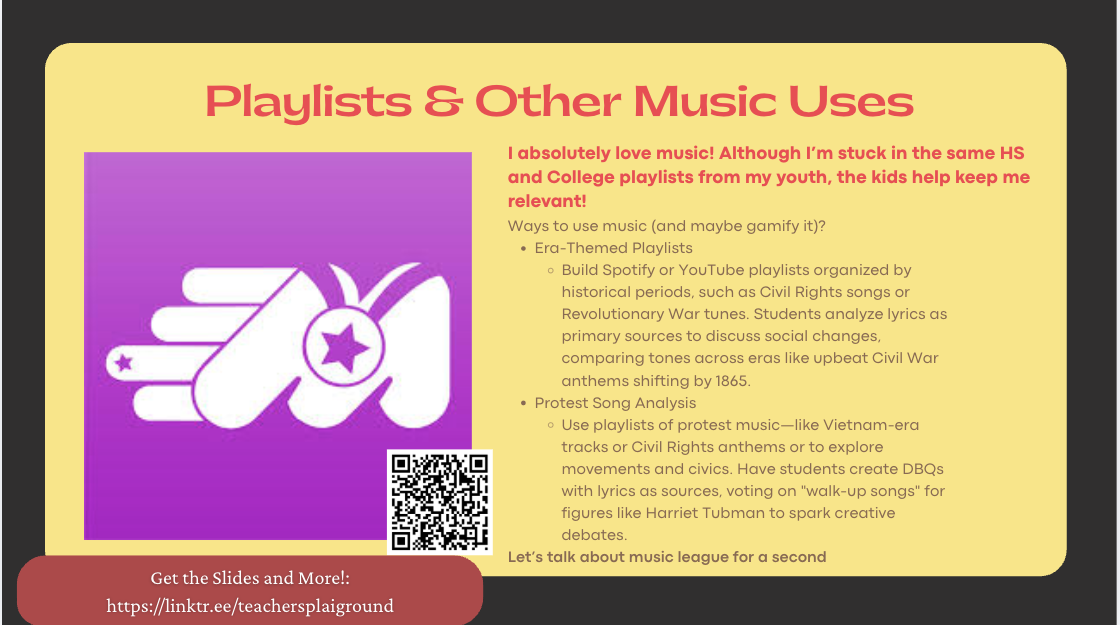
It’s no secret that I’m obsessed with finding ways to incorporate music in my classes. From having students write historical parodies of their favorite songs to creating playlists to “celebrate” the First Amendment to a playlist for specific characters or people in history, I try to find ways to incorporate music as often as possible!
What I have not been successful in doing is finding a way to smash my love of gamifying with my love of music! Literally, the Saturday that the TCEA conference started, some of my Discord buddies introduced me to Music League, which allows me to bring both of these things together!
What Is the Music League App?
Music League is an app designed to let groups create playlists together in a competitive but friendly environment. Each participant submits songs based on a theme or challenge, then everyone votes on their favorites. The app tallies points, and the playlist evolves as the rounds progress. This format turns playlist-making into a social game that encourages discovery and discussion.
In a classroom, this means students can:
Share music they love or discover new genres
Practice curating playlists with specific themes
Engage in friendly competition that motivates participation
Develop listening and critical thinking skills by evaluating peers’ choices
Why Gamify Playlist Creation?
Traditional music lessons often focus on theory, history, or performance, which can feel distant from students’ everyday experiences. Gamifying playlist creation brings music into a context they understand and enjoy. Here are some benefits:
Increased engagement: Games naturally motivate students to participate and contribute.
Collaboration: Students work together, learning to respect diverse tastes and opinions.
Creativity: Choosing songs for themes encourages creative thinking.
Critical listening: Voting requires students to analyze and articulate why they like certain tracks.
Technology integration: Using an app fits well with digital learning environments.
Setting Up Music League in the Classroom
Getting started with Music League is straightforward. Here’s a step-by-step guide for teachers:
Create a league: Set up a new league for your class on the app.
Define themes: Choose themes for each round, such as “Songs from the 90s,” “Feel-Good Tracks,” or “Songs with a Story.”
Invite students: Share the league code so students can join from their devices.
Explain the rules: Clarify how many songs each student can submit and how voting works.
Schedule rounds: Decide how long each round lasts—this could be a class period or a week.
Facilitate discussion: After voting, encourage students to explain their choices and discuss the results.
Examples of Classroom Themes and Challenges
Themes keep the game fresh and push students to think beyond their usual playlists. Here are some ideas:
Cultural Exploration: Songs from different countries or languages.
Mood Playlists: Tracks that fit moods like “Relaxing,” “Energetic,” or “Melancholy.”
Storytelling: Songs that tell a story or have meaningful lyrics.
Instrument Focus: Tracks highlighting a particular instrument, like guitar or piano.
Decades Challenge: Music from specific decades, encouraging historical context.
These themes can tie into broader lessons about music history, culture, or composition.
Encouraging Reflection and Learning
The game aspect is fun, but the real learning happens when students reflect on their choices and those of their peers. Teachers can prompt reflection by asking:
Why did you choose this song for the theme?
What elements of the song stood out to you?
How did your opinion change after hearing others’ submissions?
What new genres or artists did you discover?
This reflection builds critical thinking and deepens students’ appreciation for music.
Managing Challenges and Ensuring Inclusivity
While Music League is engaging, teachers should be mindful of potential challenges:
Access to devices: Ensure all students have access to a device or provide alternatives.
Music appropriateness: Set clear guidelines about song content to keep selections classroom-friendly.
Diverse tastes: Encourage respect for all music styles and discourage negative comments.
Technical issues: Have a backup plan in case of app or internet problems.
By addressing these points, teachers can create a positive, inclusive environment.
Measuring Success and Impact
Teachers can assess the impact of using Music League by observing:
Student participation rates and enthusiasm
Quality and creativity of playlist submissions
Depth of discussions about music choices
Improvement in students’ ability to analyze and describe music
Once my first few leagues with students finish up, I’ll make sure to grab some takeaways from the kiddos, and see what they think. I know I’m hooked, not just because it’s fun… but because I can get some new recommendations that might pull me away from listening to pop-punk and emo every second of the day!